
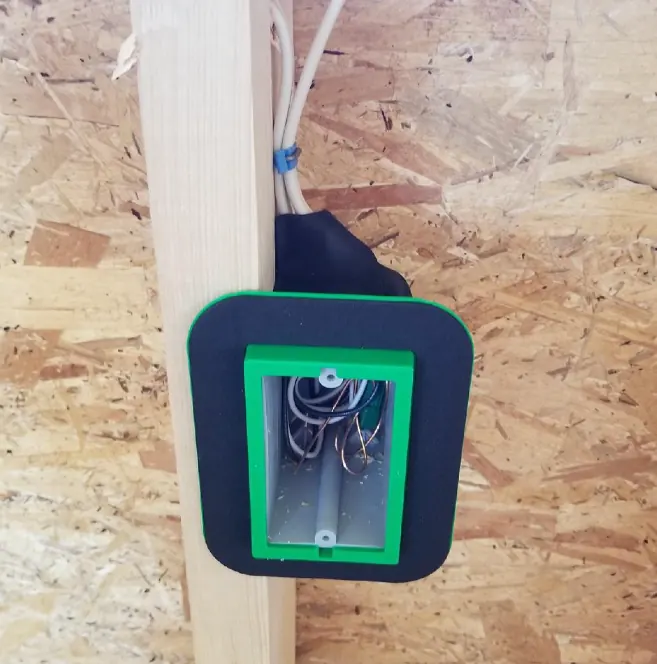
Rewiring older homes
Wiring & Rewiring for Homes in Westford & Newton, MA
- Licensed & insured
- Free estimates
- Warranty-backed work
Wiring & Rewiring
Most rewiring happens in houses people love.
Nobody rewires a house they don’t care about. The calls we get are from people who bought a 1920s colonial in Newton or a Victorian in Lowell because of the woodwork and the plaster, and now want the wiring to match how they live. The challenge is getting new cable in without wrecking what made the house worth buying.
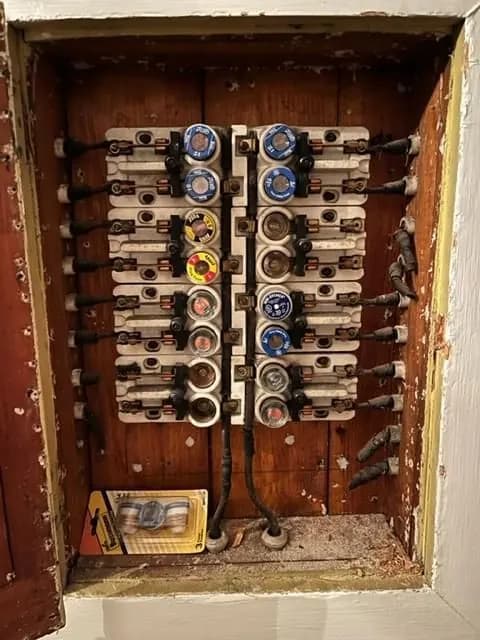
Old houses tend to have a mix of wiring from different decades. You might find original knob and tube in the attic, cloth-sheathed cable from a 1950s update, early plastic-sheathed cable without a ground, and newer circuits from the last kitchen remodel, all feeding the same panel. Part of our job is sorting out what’s what and what actually needs to go.
We rewire whole houses, single floors, and individual rooms. For many families the smart path is staged: kitchen and bath circuits first, then bedrooms, then the rest, timed around other renovation work so walls only get opened once.
“He was on time. He was knowledgable and explained everything very well. He was friendly, helpful and efficient. He finished everything in one day even though he had to go and get a part, which he did very quickly. I was very pleased.”
Signs to watch for
Signs the wiring is overdue.
- 01
Cloth or rubber insulation
Cloth-covered and rubber-insulated cable gets brittle with age. When it cracks, bare conductors can touch framing or each other.
- 02
No ground
Two-prong outlets and cables without a ground wire leave you without a safe path for fault current, and surge protectors can’t do their job.
- 03
Lots of extension cords
When every room runs on power strips, the original circuits were never meant to carry what you plug in today.
- 04
Aluminum branch wiring
Some homes from the 1960s and ’70s have aluminum branch circuits. They need special handling at connections and should be evaluated.
- 05
Mystery splices and add-ons
Previous owners’ projects often leave splices buried in walls and ceilings without boxes. Those are hidden hot spots.
- 06
Planning a renovation
Walls open for a kitchen or bath? That’s the cheapest time to replace wiring in the rooms around it.
What the job involves
How we approach a rewire.
The goal is new, grounded circuits with the least disruption to your house and your routine.
- 1
Trace and map
We identify every circuit, what it feeds and what kind of wire it’s on. You get a clear picture of what needs replacing now and what can wait.
- 2
Plan the routes
Basements, attics, closets and baseboards are our friends. We plan paths that keep wall and ceiling openings small and in places that are easy to patch.
- 3
Permit and schedule
We file the permit and schedule the work room by room so you keep power in the rest of the house.
- 4
Fish new cable and replace devices
New circuits go in with proper boxes, grounded outlets, and AFCI/GFCI protection where code calls for it. Old cable is disconnected and made safe.
- 5
Inspection and cleanup
Rough and final inspections as required, then a walkthrough. We leave openings ready for your plasterer or painter, or recommend one.
Why it matters
Why old wire is worth replacing.
Wiring doesn’t fail all at once. Insulation dries out, connections loosen through thousands of heating and cooling cycles, and circuits that were fine for lamps and radios get loaded with space heaters and window units. The risk builds quietly until a connection overheats inside a wall.
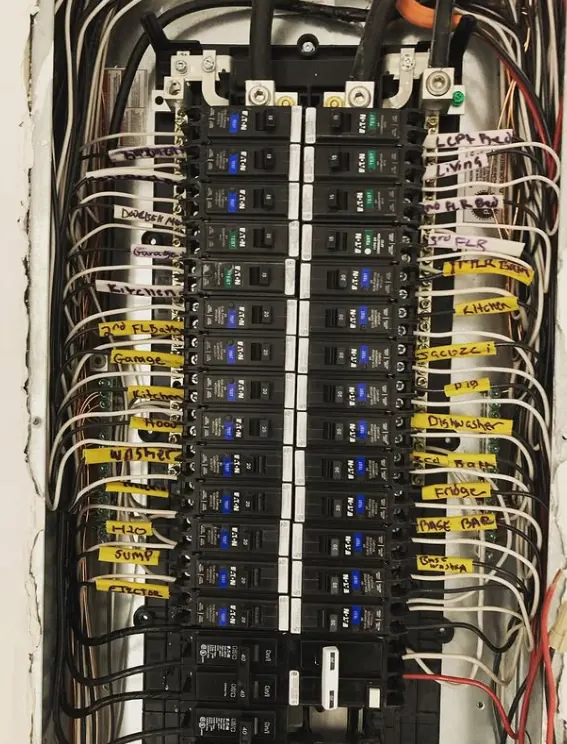
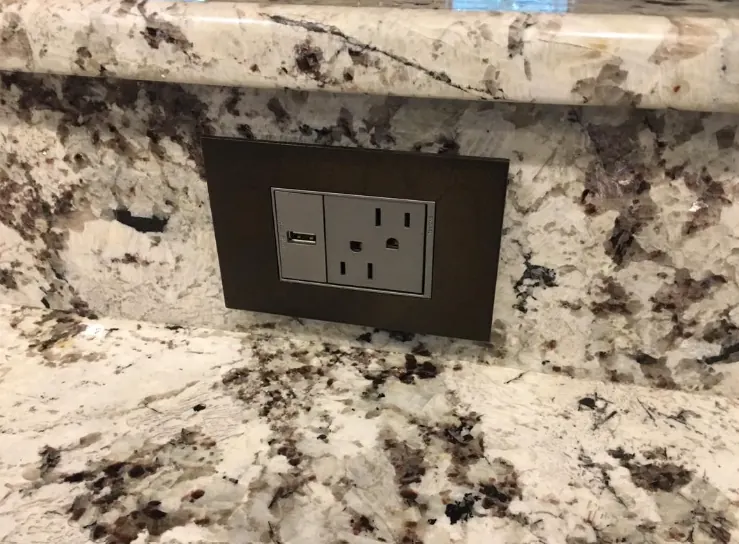
Replacing it gives you grounded outlets, circuits sized for modern appliances, and modern breaker protection that can detect dangerous arcing. It can also make a real difference with insurers and buyers, who increasingly ask about wiring age in older homes.
- Staged or whole-house
- Minimal wall openings
- Grounded, modern circuits
- Permitted and inspected
Wiring & Rewiring FAQ
Questions we get about this work
Do I have to move out during a rewire?
Usually not. We work room by room so most of the house stays powered, and we plan shut-offs around your schedule.
How much wall damage should I expect?
Some openings are unavoidable, but we keep them small and put them where patching is easy, often in closets or behind trim. Plaster walls take more care, and we plan for that.
Can you rewire just part of the house?
Yes. Kitchens, baths and any rooms still on ungrounded or cloth-covered wire are common starting points.
Will rewiring require a panel upgrade?
Not necessarily, but new circuits need breaker space. We check the panel during the estimate and tell you whether it can take the new work.
Is financing available?
Yes. Rewiring is one of the projects customers most often finance. Ask when we write up your estimate.
Related services
Often done together.
Nearby service areas
Wiring & Rewiring across the region.
- Westford, MA
- Newton, MA
- Chelmsford, MA
- Lowell, MA
- Billerica, MA
- Tewksbury, MA
- Lexington, MA
- Burlington, MA
- Boston, MA
- Cambridge, MA
- Hillsborough County, NH
- York County, ME
Free estimates · Financing · Warranty
Ready to talk wiring & rewiring?
Call Monday to Friday, 8:00 to 4:30, or send a note and we’ll get back to you with a time for your free estimate.