
Panels & service upgrades
Electrical Panel Upgrades in Westford & Greater Boston
- Licensed & insured
- Free estimates
- Warranty-backed work
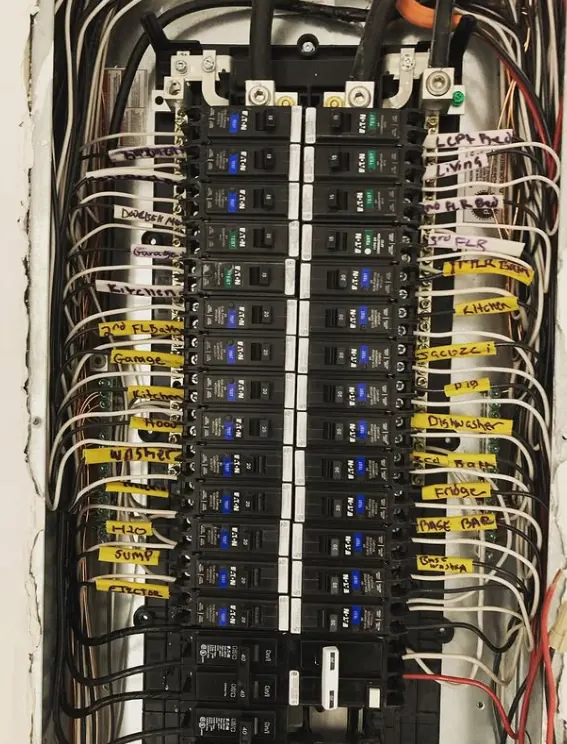
Panel Upgrades
The panel sets the limit for everything else.
Your electrical panel decides how much power the house can use at once and how safely it’s split up. When it was installed, it was probably sized for the house as it was then: gas or oil heat, a window air conditioner, maybe an electric dryer. Now the same panel is being asked to carry heat pumps, induction cooking, a second fridge in the garage and an EV charger. Something has to give.
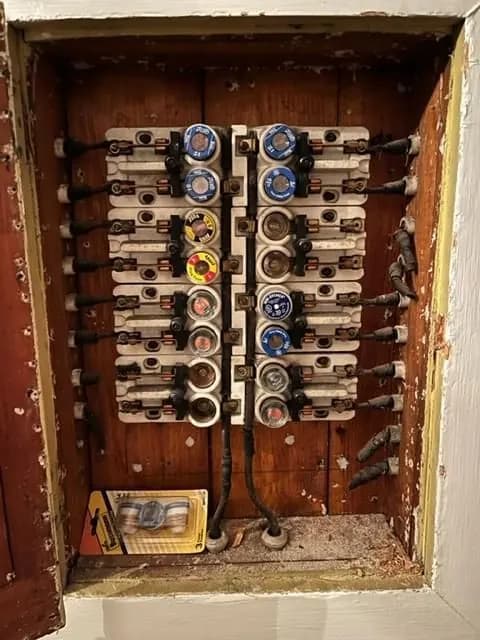
We see three situations again and again. First, older homes still on fuses or on 60-amp service that simply can’t carry modern loads. Second, 100-amp panels that are full, with tandem breakers squeezed in and new circuits tapped off old ones. Third, panels from brands with known reliability problems that home inspectors and insurers now flag. Each one has a different fix, and not every house needs a full 200-amp upgrade.
That’s why we start with a load calculation, not a sales pitch. We add up what you have and what you plan to add, then recommend the smallest change that does the job safely, whether that’s a panel swap on the same service, a service upgrade, or a load-management device that lets an existing service handle an EV charger.
“He was on time. He was knowledgable and explained everything very well. He was friendly, helpful and efficient. He finished everything in one day even though he had to go and get a part, which he did very quickly. I was very pleased.”
Signs to watch for
Signs your panel is running out of room.
Any one of these is worth a conversation. Two or three together usually means it’s time.
- 01
Fuses, or a 60-amp service
Screw-in fuses and 60-amp services were standard decades ago. They weren’t designed for today’s loads, and some insurers won’t write a policy on them.
- 02
No open breaker spaces
Tandem breakers everywhere, or circuits doubled up under one screw, means the panel was full years ago and has been worked around ever since.
- 03
Breakers that trip under normal use
If running the microwave and the toaster together trips a breaker, the circuit layout or the panel isn’t keeping up.
- 04
Heat, rust or a burning smell
A panel cover that’s warm, rust streaks from water intrusion, or a faint burnt-plastic smell are reasons to call right away.
- 05
A brand the inspector flagged
Some older panel brands have a history of breakers that don’t trip when they should. If a home inspection called yours out, get it evaluated.
- 06
A heat pump or EV on the way
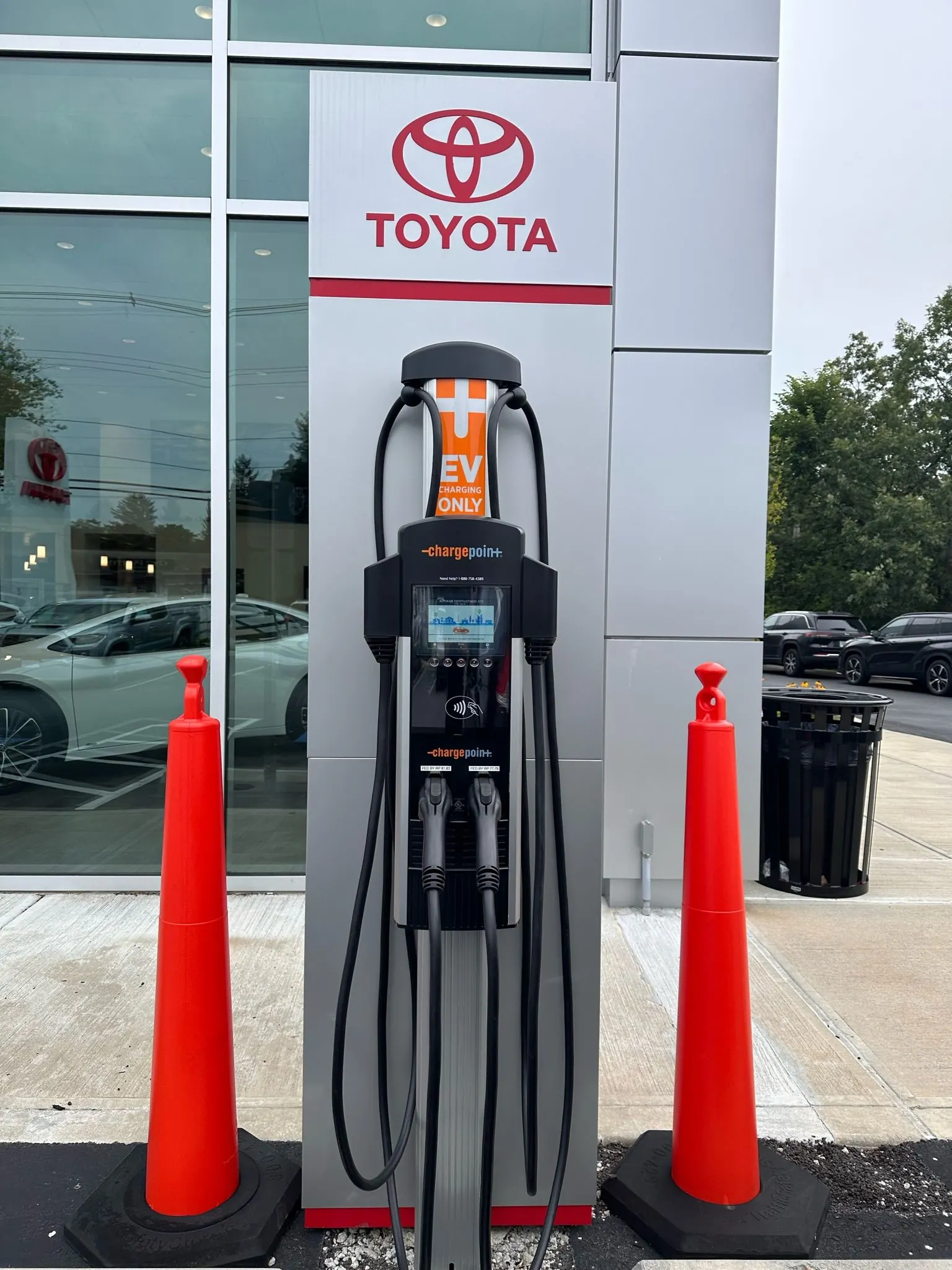
Both are large, long-running loads. Plan the panel first so the new equipment doesn’t arrive to a service that can’t carry it.
What the job involves
What a panel upgrade involves.
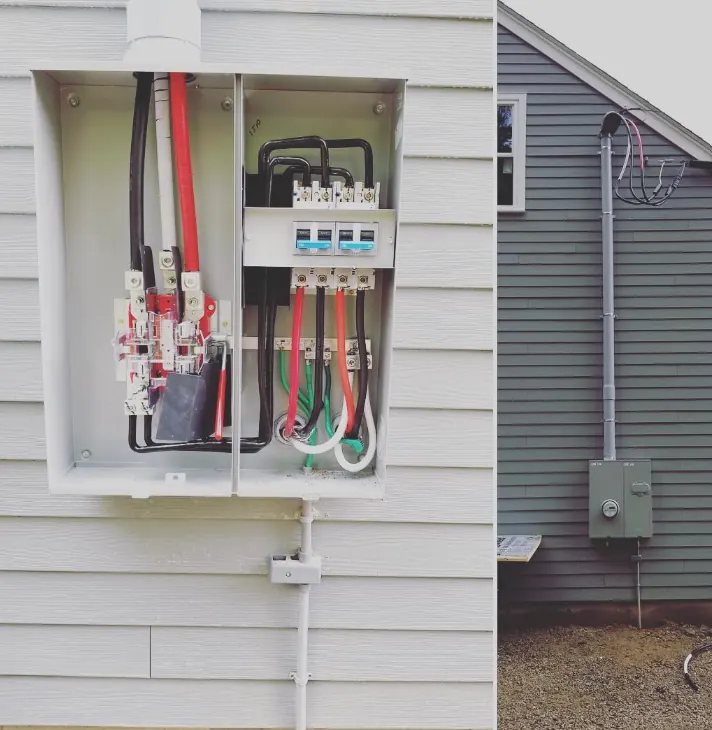
Most panel swaps are finished in a day. Service upgrades take coordination with the utility, which we handle.
- 1
Load calculation
We inventory what you have and what you plan to add, then calculate the service size the house actually needs. That number drives the whole recommendation.
- 2
Written estimate and options
You get a clear price for the panel or service work, plus any related fixes we found, like grounding and bonding that doesn’t meet current code.
- 3
Permit and utility coordination
We file the permit with your town and, for service upgrades, coordinate the disconnect and reconnect with your utility so the outage is as short as possible.
- 4
Installation day
Power goes off, the old panel comes out and the new one goes in. Circuits are landed, torqued to spec and neatly dressed, with AFCI and GFCI protection added where code calls for it.
- 5
Labeling, inspection and walkthrough
Every circuit is traced and labeled on the door. After the wiring inspector signs off and power is restored, we show you where everything is.
Why it matters
More capacity, fewer surprises.
A right-sized panel is the difference between adding a heat pump with confidence and discovering mid-winter that the heat and the dryer can’t run at the same time. It also keeps each circuit protected by the correct breaker, which is the whole point of having breakers.
There’s a practical side too. Buyers’ home inspectors look hard at panels. A modern, labeled, permitted panel takes one item off the negotiation list. And an organized panel makes every future job, from a new bathroom circuit to a generator hookup, faster and cheaper.
- Sized by load calculation
- AFCI/GFCI where code requires
- Grounding and bonding checked
- Every circuit labeled
Panel Upgrades FAQ
Questions we get about this work
Do I need 200 amps?
Not always. Plenty of homes are fine on a well-organized 100- or 150-amp service. The load calculation tells us. If you’re planning heat pumps, an EV and electric cooking, 200 amps is often the sensible target.
How long will the power be off?
For a straight panel replacement, usually most of a working day. For a service upgrade that involves the utility, it depends on their schedule, and we coordinate to keep the outage as short as we can.
Can I add an EV charger without upgrading?
Sometimes. If the load calculation shows room, we just add the circuit. If it’s tight, a load-management device can let the charger share capacity with other loads. We’ll tell you which applies.
Will my town require an inspection?
Yes. Panel and service work in Massachusetts is permitted and inspected by the local wiring inspector. We schedule it and meet the inspector.
Is financing available for a panel upgrade?
Yes. Ask about financing when we write up your estimate.
Related services
Often done together.
Nearby service areas
Panel Upgrades across the region.
- Westford, MA
- Newton, MA
- Chelmsford, MA
- Lowell, MA
- Billerica, MA
- Tewksbury, MA
- Lexington, MA
- Burlington, MA
- Boston, MA
- Cambridge, MA
- Hillsborough County, NH
- York County, ME
Free estimates · Financing · Warranty
Ready to talk panel upgrades?
Call Monday to Friday, 8:00 to 4:30, or send a note and we’ll get back to you with a time for your free estimate.