
Home & commercial installs
Generator Installation in Westford & Greater Boston
- Licensed & insured
- Free estimates
- Warranty-backed work
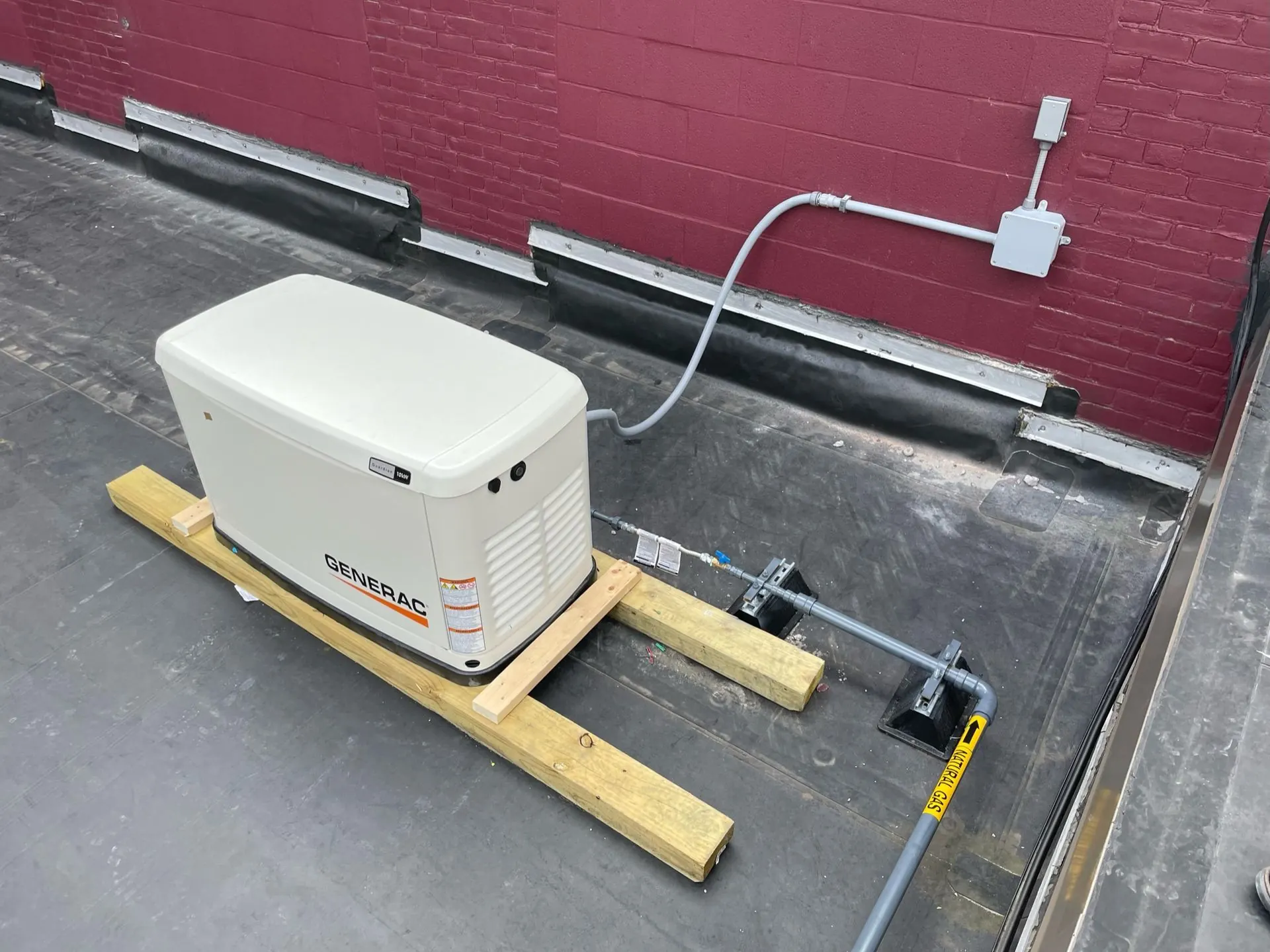
Generator Installation
A generator is only as good as its installation.
Installing a generator means grafting a second power source into your home or building’s electrical system and connecting it to a fuel supply. Neither is a weekend project. Done wrong, it can backfeed the grid, damage equipment, fail to start when you need it, or create a carbon monoxide hazard if it’s placed too close to the house.
Before we recommend a unit, we look at a handful of things: how much power you need, whether you want the whole house or essential circuits, what fuel is available (natural gas, propane or diesel for some commercial jobs), where the unit can sit with safe clearances, and how much noise and space matter to you and your neighbors.
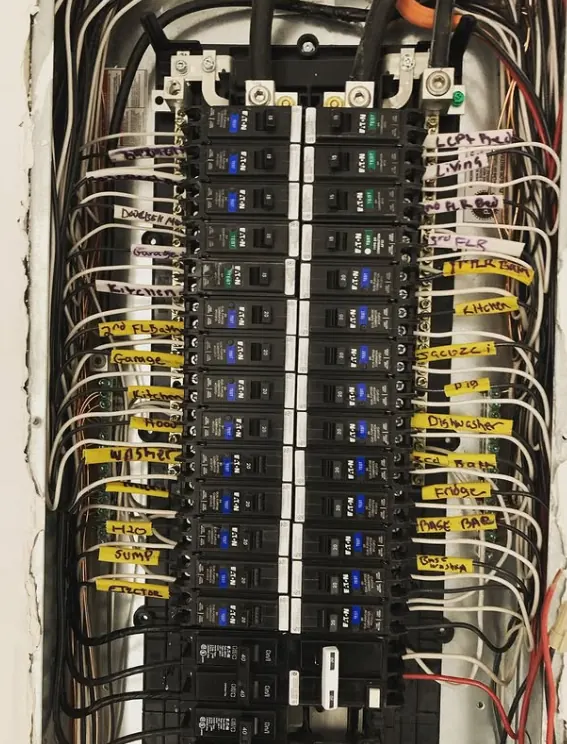
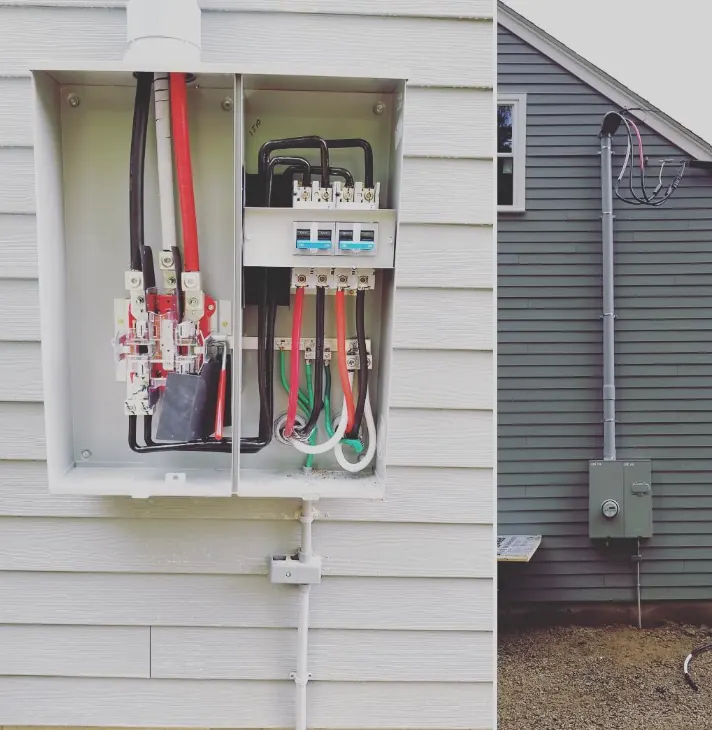
Our installs include the transfer switch, the wiring between generator and panel, coordination on the fuel connection, the permits, and a test run under load. On commercial jobs, we plan around which systems must stay on and for how long, whether that’s coolers and registers or an entire building.
“He was on time. He was knowledgable and explained everything very well. He was friendly, helpful and efficient. He finished everything in one day even though he had to go and get a part, which he did very quickly. I was very pleased.”
Signs to watch for
What to consider before you buy.
- 01
Power requirements
How much the house or building draws, and what has to run at the same time during an outage.
- 02
Generator type
A standby unit for automatic whole-home backup, or a portable unit for selected circuits.
- 03
Fuel source
Natural gas, propane or diesel each affect cost, runtime and installation.
- 04
Location
Away from windows, doors and vents, but reachable for maintenance and fuel.
- 05
Size and noise
Standby units vary in footprint and sound. It matters on tight lots.
- 06
Permits
Many Massachusetts towns require permits for generator installs. We take care of them.
What the job involves
Our installation process.
- 1
Assess your power needs
We work out what you need to power and size the generator to start and run it.
- 2
Evaluate the location
We find the safest, most practical spot, with proper clearances and a stable pad or mount.
- 3
Handle permits
We file the electrical permit and coordinate inspections.
- 4
Install the unit and transfer switch
Generator set and wired, automatic transfer switch installed, and fuel connection coordinated.
- 5
Test and advise
We run the system under load, confirm automatic transfer, and give you maintenance recommendations.
Good to know
Good to know about generator installs.
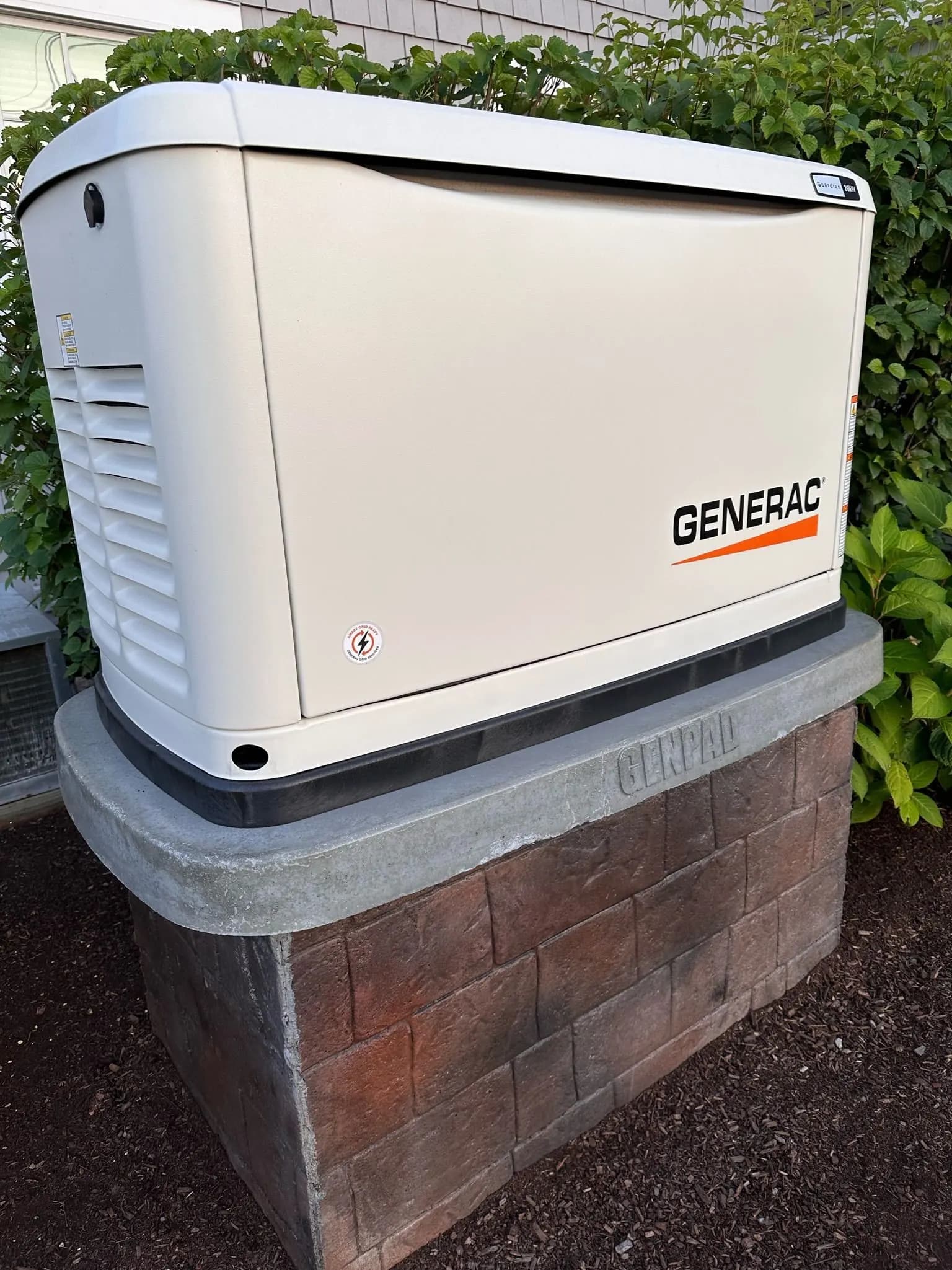
Installation often involves more than one trade. Besides the electrical work, standby generators need a pad or mounting base and a gas or propane connection. We coordinate those pieces so the installation happens in the right order and passes inspection the first time.
Placement is a safety decision. Generators produce exhaust that must stay away from doors, windows and vents, and units need clearance for airflow and service. On tight lots, we’ll walk the property with you to find a location that’s safe, practical and as quiet as possible for you and your neighbors.
Why it matters
Ready when the lights go out.
A properly installed standby generator starts on its own within moments of an outage and switches back when utility power returns. You don’t have to be home, and you don’t have to do anything.
For businesses, backup power can be the difference between closing for a day and staying open, protecting inventory, keeping security systems online and serving customers when competitors can’t.
- Load-based sizing
- Automatic transfer switches
- Safe siting & clearances
- Tested under load
Generator Installation FAQ
Questions we get about this work
How long does a standby generator installation take?
The electrical installation typically takes a day or two once the pad and fuel work are ready. Permits and equipment lead times affect the overall schedule.
What size generator do I need?
It depends on what you want to run. We do a load calculation rather than guessing, so the unit can start large motors like well pumps and air conditioners.
Do you install commercial generators?
Yes. We plan commercial systems around which loads must stay on and for how long.
Should a generator be tested after installation?
Yes. We test under load at installation, and standby units run regular self-tests. Periodic maintenance keeps them ready.
Related services
Often done together.
Nearby service areas
Generator Installation across the region.
- Westford, MA
- Newton, MA
- Chelmsford, MA
- Lowell, MA
- Billerica, MA
- Tewksbury, MA
- Lexington, MA
- Burlington, MA
- Boston, MA
- Cambridge, MA
- Hillsborough County, NH
- York County, ME
Free estimates · Financing · Warranty
Ready to talk generator installation?
Call Monday to Friday, 8:00 to 4:30, or send a note and we’ll get back to you with a time for your free estimate.