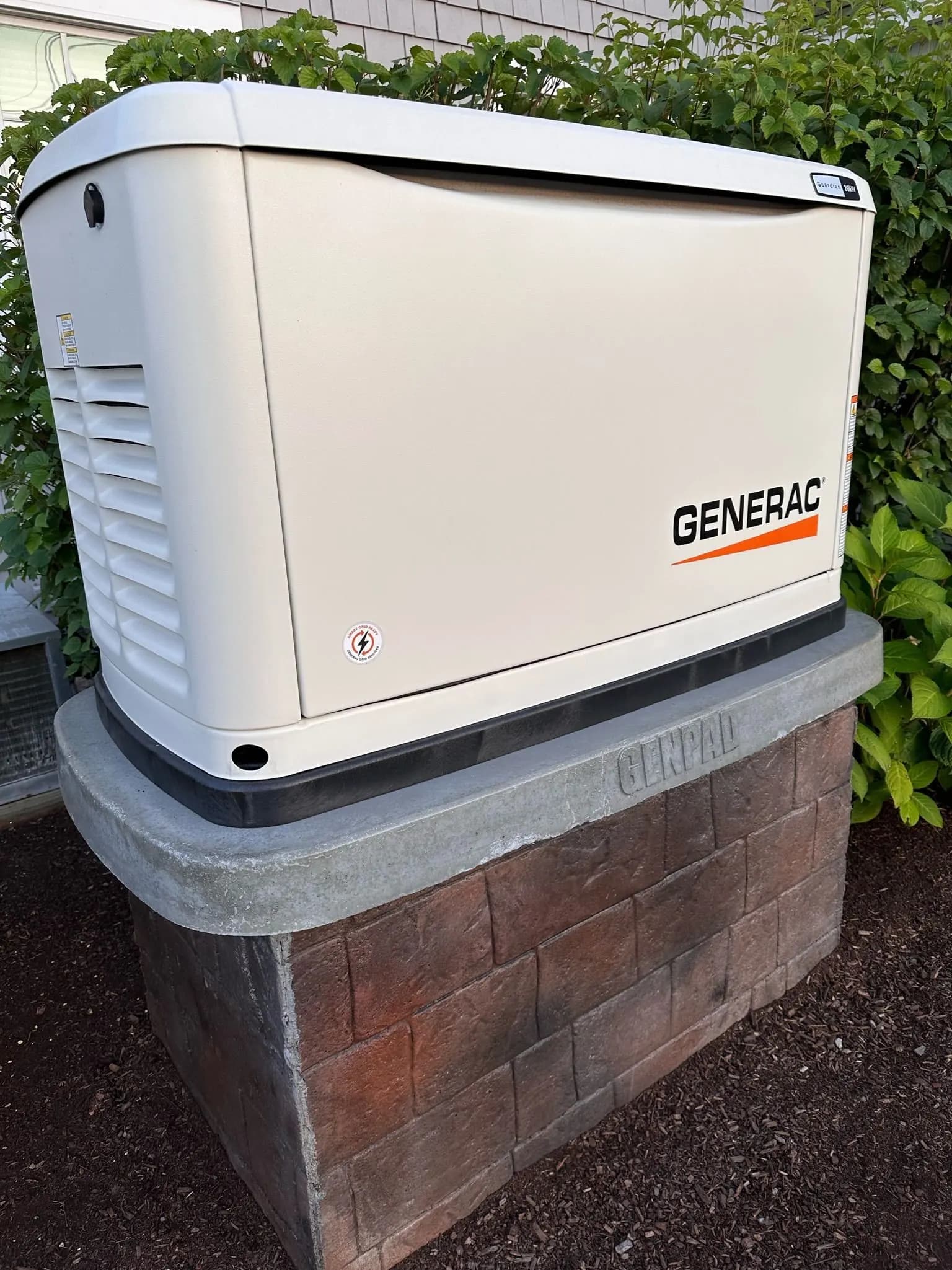
Whole-home & essential circuits
Backup Generators in Westford, Newton & Nearby Towns
- Licensed & insured
- Free estimates
- Warranty-backed work
Backup Generators
Whole house or just the essentials?
The first decision with a backup generator is how much of the house to cover. A whole-home system powers everything, which is the most convenient option and the most expensive. An essential-circuits system powers a chosen list: heat, well pump, sump pump, refrigerator, some lights and outlets, internet. For many families that’s all they really need to ride out a storm comfortably.
Your choice drives the size of the generator, the type of transfer switch, and the cost. We walk through your house with you, list what matters during an outage, and design around that, including load-management devices that let a smaller generator handle big loads by not running them all at once.
In our service area, outages tend to come from winter storms and summer thunderstorms. Homes on long rural lines in towns like Westford, Tewksbury, Dracut and southern New Hampshire often wait longest for power to come back, and that’s where we see the most demand for backup generators.
“He was on time. He was knowledgable and explained everything very well. He was friendly, helpful and efficient. He finished everything in one day even though he had to go and get a part, which he did very quickly. I was very pleased.”
Signs to watch for
Loads worth backing up.
- 01
Heating system
Furnaces and boilers need power for controls, blowers and circulators, even when they burn oil or gas.
- 02
Well pump
No power, no water: for drinking, flushing or washing.
- 03
Sump pump
Outages and heavy rain often go together. Keep the basement dry.
- 04
Refrigeration
Protect food and medications during longer outages.
- 05
Medical equipment
Oxygen concentrators and other devices can’t wait for the grid.
- 06
Internet and office
Stay connected and keep working through the outage.
What the job involves
Planning your backup system.
- 1
List what matters
We walk through the house and write down what needs to run during an outage.
- 2
Calculate the load
Including the startup surge of motors like well pumps and AC compressors.
- 3
Pick coverage and switch
Whole-home or essential circuits, with the transfer switch to match.
- 4
Install and connect
Generator, transfer switch and fuel coordination, permitted and inspected.
- 5
Test and explain
A test under load and a walkthrough of what happens in an outage.
Good to know
Good to know before the next storm.
Timing matters. Generator demand spikes right after a big outage, and equipment lead times and permit schedules stretch with it. The best time to plan backup power is late spring or summer, so the system is installed, inspected and tested before the first nor’easter of the season.
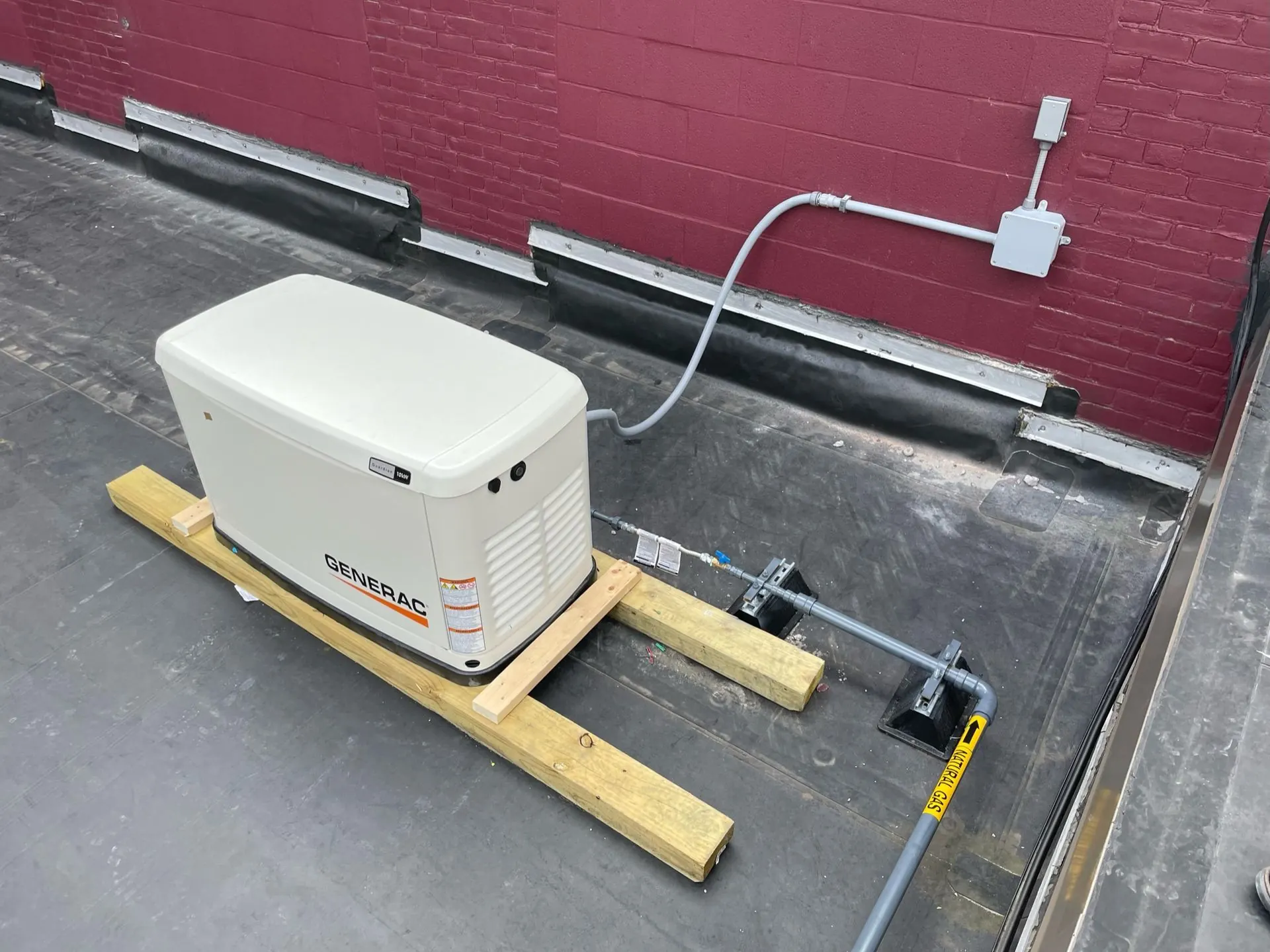
Fuel choice shapes the project. If natural gas is already at the street, a standby unit can run on it indefinitely. If not, propane from a tank sized to your expected runtime is the usual answer, and it needs to be placed with its own clearances. We coordinate with your gas utility or propane supplier so the fuel side and the electrical side are ready at the same time.
After installation, a standby generator runs short self-tests on a schedule and needs routine maintenance like any engine. We’ll explain what the unit does on its own, what needs a technician, and what you should check after a long run, such as fuel levels on propane systems.
Why it matters
Comfort and safety through the storm.
A backup generator turns a multi-day outage from an emergency into an inconvenience. The house stays warm, the pipes don’t freeze, the basement stays dry and the food stays cold.
It also protects the house itself. Frozen pipes and flooded basements cause far more expensive damage than most outages, and a generator is often cheaper than one insurance claim.
- Whole-home or essentials
- Automatic transfer
- Load management options
- Storm-ready installs
Backup Generators FAQ
Questions we get about this work
How does a backup generator connect to my home?
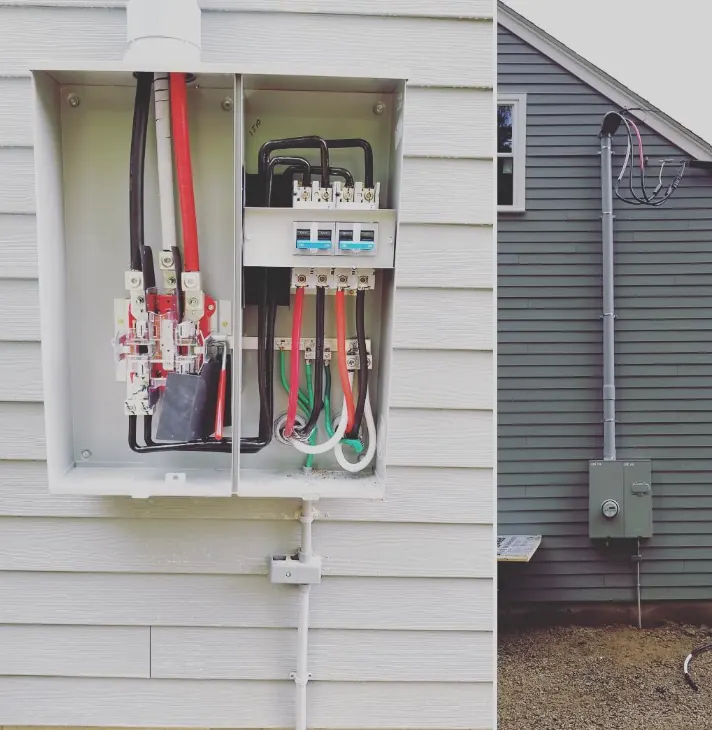
Through an automatic transfer switch that disconnects the house from the utility and connects it to the generator during an outage, then switches back when power returns.
Can a backup generator run central air?
With a large enough generator or load management, yes. We include it in the load calculation if you want it covered.
What fuel do standby generators use?
Most home standby units run on natural gas or propane, which means no refueling during an outage.
Can I start small and add coverage later?
Sometimes. It depends on the generator and transfer switch you choose, so let us know your long-term plans up front.
Related services
Often done together.
Nearby service areas
Backup Generators across the region.
- Westford, MA
- Tewksbury, MA
- Dracut, MA
- Chelmsford, MA
- Billerica, MA
- Hillsborough County, NH
- Rockingham County, NH
- York County, ME
Free estimates · Financing · Warranty
Ready to talk backup generators?
Call Monday to Friday, 8:00 to 4:30, or send a note and we’ll get back to you with a time for your free estimate.