
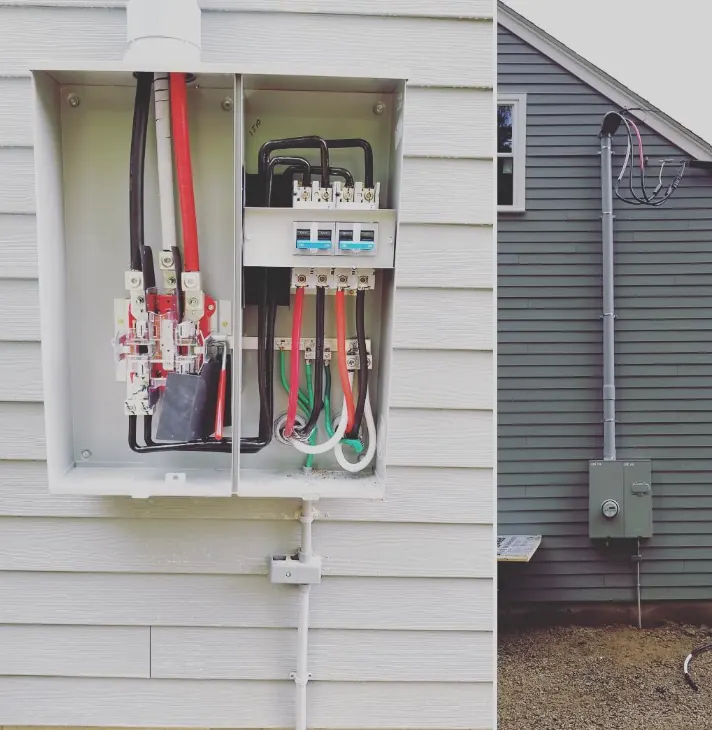
Protect what’s plugged in
Whole-Home Surge Protection in Westford & Newton, MA
- Licensed & insured
- Free estimates
- Warranty-backed work
Surge Protection
Power strips only protect what’s plugged into them.
Most people think of surge protection as the strip under the desk. That helps the computer. It does nothing for the furnace control board, the heat pump, the refrigerator, the washer, the garage door opener, or any of the dozens of hardwired things in a modern house that now run on electronics.
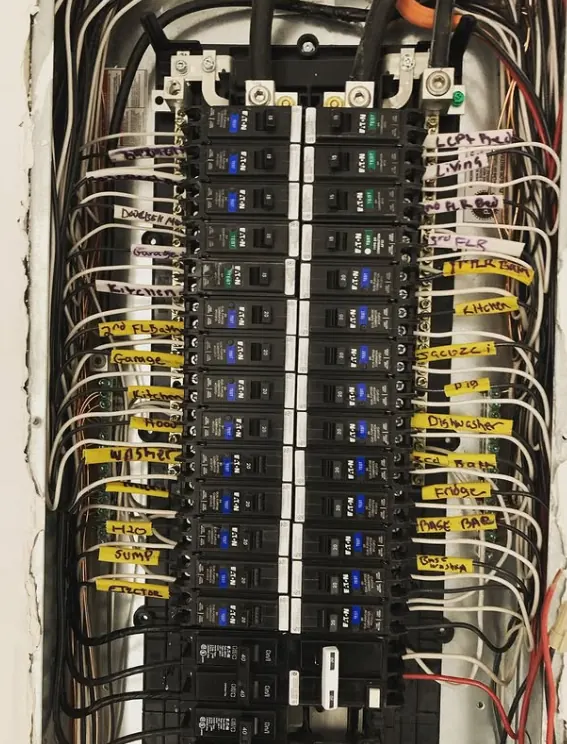
A whole-home surge protective device mounts at your electrical panel and clamps down on surges that come in from the utility side or are generated inside the house when big motors cycle. It’s not a force field, and it can’t stop a direct lightning strike, but it takes the edge off the much more common surges that shorten the life of electronics a little at a time.
New England gets its share of summer thunderstorms, plus the switching surges that come with outages and restorations after winter storms. Whole-home protection is inexpensive compared to one fried control board, and we often install it alongside panel upgrades, generators and HVAC work.
“He was on time. He was knowledgable and explained everything very well. He was friendly, helpful and efficient. He finished everything in one day even though he had to go and get a part, which he did very quickly. I was very pleased.”
Signs to watch for
Signs you’d benefit from surge protection.
- 01
Electronics fail early
Appliances, chargers and control boards that die young can be a sign of repeated small surges.
- 02
Frequent outages and restorations
Storm-related outages bring switching surges when power comes back.
- 03
New heat pump or HVAC
Modern HVAC equipment uses sensitive electronics. Many installers recommend surge protection.
- 04
Lights flicker when big loads start
Motors starting and stopping inside the house create internal surges too.
- 05
Expensive smart appliances
Induction ranges, smart fridges and washers have control boards that are costly to replace.
- 06
A recent lightning event nearby
If a nearby strike took out equipment once, it can happen again.
What the job involves
What installation involves.
- 1
Check grounding
Surge protection only works with a good grounding system, so we verify your grounding electrode and bonding first.
- 2
Select the device
We choose a surge protective device rated for your service and panel.
- 3
Install at the panel
Mounted with short, direct leads, which matters for how well it performs.
- 4
Recommend point-of-use
We suggest quality plug-in protection for home office and entertainment gear as a second layer.
- 5
Explain the indicators
Most devices have status lights. We show you what normal looks like.
Good to know
Good to know about surge protectors.
Surge protectors wear. Each surge they absorb uses up a little of their capacity. Whole-home devices usually have indicator lights that show whether protection is still active; check them occasionally, especially after a big storm, and replace the device if the light says so.
Protect the incoming lines too. Surges can also enter through cable, phone and antenna lines. We can advise on protection for those entry points alongside the panel device.
Why it matters
Layered protection works best.
Whole-home protection at the panel handles the big incoming surges. Point-of-use protectors at sensitive electronics catch what’s left. Together, they protect the investment you’ve made in equipment that’s expensive to replace and often hard to get quickly after a storm.
Surge protection works hand in hand with good grounding. If your grounding and bonding haven’t been checked in years, installation is the right time to do it.
- Mounted at the panel
- Grounding verified first
- Protects hardwired equipment
- Pairs with point-of-use
Surge Protection FAQ
Questions we get about this work
Will whole-home surge protection stop lightning?
Nothing can guarantee protection from a direct strike. Whole-home devices are designed for the far more common surges from the utility and from equipment inside the house.
Do I still need power strips with surge protection?
Yes, for sensitive electronics like computers and TVs. Layered protection works best.
How long does installation take?
Usually an hour or two when the panel has room, and often less when we’re already doing panel work.
Is surge protection required by code?
Current code calls for surge protection on new and replaced residential services, and it’s a smart addition to any home. We’ll tell you what applies to your job.
Related services
Often done together.
Nearby service areas
Surge Protection across the region.
- Westford, MA
- Newton, MA
- Chelmsford, MA
- Lowell, MA
- Billerica, MA
- Tewksbury, MA
- Lexington, MA
- Burlington, MA
- Boston, MA
- Cambridge, MA
- Hillsborough County, NH
- York County, ME
Free estimates · Financing · Warranty
Ready to talk surge protection?
Call Monday to Friday, 8:00 to 4:30, or send a note and we’ll get back to you with a time for your free estimate.