
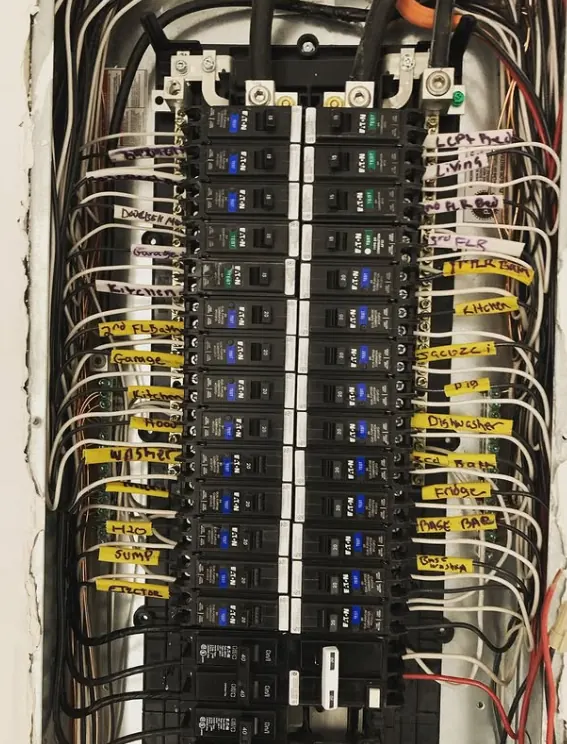
Breakers, AFCI & GFCI
Circuit Breaker Repair & Replacement in Westford, MA
- Licensed & insured
- Free estimates
- Warranty-backed work
Circuit Breakers
Breakers are safety devices. Treat them that way.
A circuit breaker has one job: to cut power before a wire gets hot enough to start a fire. When it trips, it’s telling you the circuit carried more current than it should have, or that there’s a short or ground fault somewhere downstream. Resetting it over and over, or swapping in a bigger breaker so it stops tripping, removes the protection that keeps the house safe.
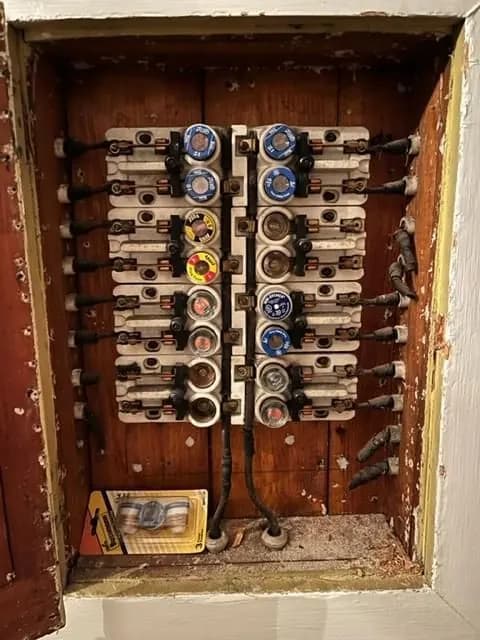
Breakers do wear out, especially ones that have tripped many times or have been exposed to moisture. And some older panels contain breakers from brands with a known history of not tripping when they should. Part of our work is sorting out whether the breaker is the problem or the messenger.
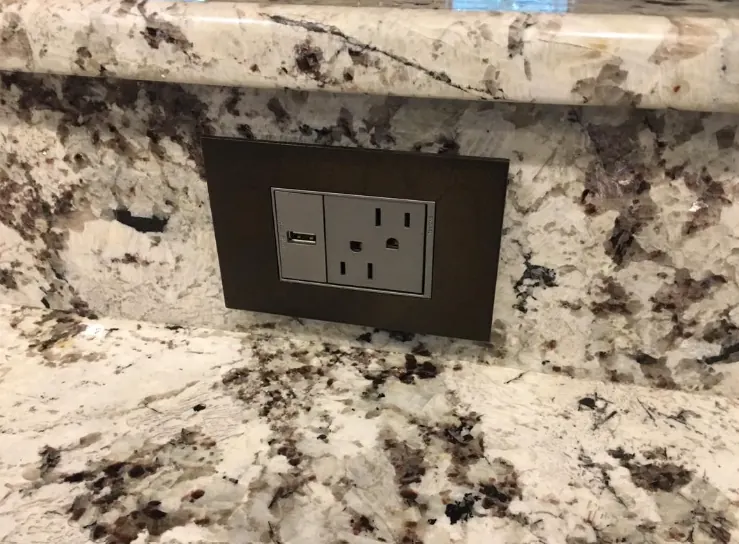
We also install the newer kinds of protection current code calls for. AFCI breakers detect dangerous arcing, the kind that happens at a damaged cord or a loose connection. GFCI protection guards against shock in kitchens, baths, basements, garages and outdoors. Dual-function breakers combine both.
“He was on time. He was knowledgable and explained everything very well. He was friendly, helpful and efficient. He finished everything in one day even though he had to go and get a part, which he did very quickly. I was very pleased.”
Signs to watch for
When a breaker needs attention.
- 01
Trips on the same circuit, often
Repeated trips usually mean an overloaded circuit or a fault. The fix might be a new circuit, not a new breaker.
- 02
Trips the moment you reset it
Instant trips point to a short or ground fault. Leave it off and call.
- 03
Won’t stay latched
A breaker that feels loose or won’t hold in the on position may be worn out or damaged.
- 04
Warm breaker or burning smell
Heat at the panel means a poor connection or failing breaker. That’s a priority call.
- 05
Wrong-sized breakers
A 20-amp breaker on 14-gauge wire, usually installed to stop nuisance trips, is a fire hazard we find more often than you’d think.
- 06
No AFCI or GFCI where needed
Older homes often lack protection in kitchens, baths and outdoors. Adding it is one of the best-value safety upgrades there is.
What the job involves
From tripping to fixed.
- 1
Check the load
We look at what’s plugged into the circuit and measure current, since many trips are simply too much on one circuit.
- 2
Test for faults
Insulation and continuity testing tells us whether there’s a short or ground fault in the wiring or an appliance.
- 3
Inspect the panel
We check breaker condition, wire sizes, connections and whether the panel itself has known issues.
- 4
Fix the cause
That might mean splitting a circuit, repairing a fault, or replacing a worn breaker with the correct type and rating.
- 5
Add protection where it’s missing
We recommend AFCI or GFCI protection for circuits that should have it and install it as part of the job if you’d like.
Why it matters
The right breaker is invisible until it matters.
When breakers are sized and matched to their wiring, you forget they exist, and that’s how it should be. The day something goes wrong, like a chewed cord behind a couch or water in an outdoor outlet, they’re the reason a problem stays small.
Upgrading to modern protection also brings older homes closer to current standards, which buyers’ home inspectors and insurers notice.
- Correct breaker for the wire
- AFCI & GFCI protection
- Worn breakers replaced
- Overloaded circuits split
Circuit Breakers FAQ
Questions we get about this work
Can I just install a bigger breaker?
No. The breaker has to match the wire it protects. A bigger breaker lets the wire overheat before it trips. If a circuit trips because it’s overloaded, the fix is to redistribute the load or add a circuit.
What’s the difference between AFCI and GFCI?
GFCI protects people from shock by detecting current leaking to ground. AFCI protects against fire by detecting arcing in wiring or cords. Many circuits now call for one or both.
Do breakers wear out?
Yes. Age, heat, moisture and repeated trips all take a toll. A breaker that won’t latch or feels hot should be replaced.
My panel is an older brand. Should I worry?
Some older panel brands have a documented history of breakers failing to trip. If yours was flagged by an inspector, we’ll evaluate it and give you straight advice.
Related services
Often done together.
Nearby service areas
Circuit Breakers across the region.
- Westford, MA
- Newton, MA
- Chelmsford, MA
- Lowell, MA
- Billerica, MA
- Tewksbury, MA
- Lexington, MA
- Burlington, MA
- Boston, MA
- Cambridge, MA
- Hillsborough County, NH
- York County, ME
Free estimates · Financing · Warranty
Ready to talk circuit breakers?
Call Monday to Friday, 8:00 to 4:30, or send a note and we’ll get back to you with a time for your free estimate.